Faith is NOT a Gift for Salvation

Please review the following before reading this article:

Calvinists teach that everyone is totally depraved and are spiritually “dead” and therefore cannot believe God on their own, instead the person who is chosen by God must receive a “Gift of Faith” from Him. In his book “The Reformed Faith,” Loraine Boettner, a Traditional Calvinist, states regarding the Inability of fallen man:

Because of the fall, man is unable of himself to savingly believe the gospel. The sinner is dead, blind, and deaf to the things of God; his heart is deceitful and desparately corrupt. His will is not free, it is in bondage to his evil nature, therefore, he will not – indeed he cannot – choose good over evil in the spiritual realm. Consequently, it takes much more than the Spirit’s assistance to bring a sinner to Christit takes regeneration by which the Spirit makes the sinner alive and gives him a new nature. Faith is not something man contribute to salvation but is itself a port of God’s gift of salvation –-it is God’s gift to the sinner, not the sinner’s gift to God.

Faith/belief leading to Salvation is never called a gift in Scripture. There are four things related to Salvation which are specifically stated in Scripture as being a Gift of God:

  • The Holy Spirit is called a gift in Acts 2:38 and 10:45
  • Justification is called a gift in Romans 5:16,18
  • Righteousness is called a gift in Romans 5:7
  • Eternal Life is called a gift in Romans 6:23

Grace is never specifically called “a gift,” but by definition it is something given. We are given unmerited favor which we can neither earn nor purchase.

In these passages, Romans 12:3,6,15; 1 Corinthians 1:4, 3:10, Galatians 2:9; Ephesians 3:2,7,8, 4:7; 2 Thessalonians 2:16; and 2 Timothy 1:9, most are speaking of receiving grace for a specific purpose to a person who is already a believer. These aren’t referring to the grace that gave us the gift of Eternal Life, Righteousness, Justification or the Holy Spirit which are all part of Salvation.

However, belief/faith is never called a gift, except for one circumstance and that is the Spiritual Gift of Faith which is a special type of faith given only to specific believers [those who are ALREADY saved]. Never to unbelievers.

The only Scripture passage that to the English reader sounds as if Faith is a gift is Ephesians 2:8 “For by grace ye are saved by faith and that not of yourselves it is the gift of God” In English the antecedent to a demonstrative pronoun is usually the nearest noun, so it is easy to misunderstand this because “faith” was the last noun mentioned. So, we see “faith” and “that” and think “that” is referring to “faith.”

However, in Greek, the antecedent to the demonstrative pronoun must have the same gender. The Greek word translated “faith” is feminine, whereas the demonstrative pronoun is “neuter.” The Greek word translated “grace” is also feminine, so “that” can’t refer to “grace” either. So where is the antecedent to “that”?

The same grammatical construction occurs in two other verses in the New Testament:

  • 1 Cor. 6:6 [but brother goeth to law with brother], and that [neuter] before the unbelievers.
  • 1 Cor. 6:8 Nay, [ye do wrong, and defraud], and that [neuter] your brethren.

In each, the bracketed part as a complete concept is being referred to by the demonstrative pronoun “that.” In other words, in the first one “that” is equal to “but brother goeth to law with brother,” and in the second one, “that” equals “ye do wrong, and defraud.” So, similarly, “this” in Ephesians 2:8 is referring to the complete concept preceding it, which is Salvation on the basis of Grace which is accessed through faith/belief.

The following is inaccurate, will be Replaced, stay tuned.

  1. The subject of the sentence in Ephesians 2:8 is “ye are saved” [Salvation]
  2. “By grace” is a prepositional phrase modifying “ye are saved;”
  3. “by faith”is modifying “saved.”

Salvation is the subject. “Salvation–by grace through faith” in verse 8 is being contrasted with “Salvation–by works” in verse 9: “For by grace are ye saved through faith; and that not of yourselves: it is the gift of God: Not of works, lest any man should boast.” [Eph. 2:8-9]

Where DOES faith come from?

Romans 10:17 “So then faith cometh by hearing, and hearing by the word of God.”

The order of Salvation:

  • First, the unbeliever hears the Gospel [1 Cor. 15:1-4]
  • Then the unbeliever changes his mind [repents] from unbelief to belief [Unless he refuses to believe]
  • This belief/faith is the way God has determined for us to access God’s Grace. Romans 5:2 “By whom also we have access by faith into this grace wherein we stand, and rejoice in hope of the glory of God.
  • At the moment of belief, the person is saved.


Dead Does NOT Equal “Inability”

Calvinists use the analogy of a corpse/physically dead body in an attempt to prove that the totally depraved “spiritually dead” person is unable to believe the Gospel in order to be saved; therefore requiring that the person be regenerated by the Spirit FIRST and then given the “gift of faith” to enable the person to believe the Gospel.

This concept is not found in Scripture. In fact, except for when speaking of the literal death resulting in a literal dead body, dead NEVER means inability in the New Testament. This is the central issue in Calvinism, because if a “spiritually dead” person IS able to believe the Gospel, without receiving the “gift of faith” from God, the rest of T.U.L.I.P becomes unnecessary.

“Dead” according to Paul and Peter

Romans 6:2, 1; Peter 2:24 — “We are dead to sin.” Does that mean we are unable to sin?
Romans 6:7-8; 2 Timothy 2:11; Colossians 2:20: “We are dead with Christ.” Does that mean we are unable to do anything?
Romans 7:4, Galatians 2:19 — “We are dead to the law.” Does that mean we are unable to do anything that is in the law?
Romans 8:10 — “If Christ is in us, our body is dead because of sin, but the Spirit is life” Does that mean that right now our body is a corpse that is unable to do anything?
1 Timothy 5:6 — “But she that liveth in pleasure is dead while she liveth.” Does that mean she is unable to do anything?”

One of the verses that Calvinists quote is Colossians 2:13 where it says “dead in trespasses and sins.” They believe this means inability, but just a little bit later in verse 20, Paul states that we are dead with Christ, and then in Colossians 3:3 Paul states that “ye are Dead, and your life is hid with Christ in God” which indicates again that Paul doesn’t mean that because we are dead, we are unable to do anything.

The other verse they quote is Ephesians 2:1 “And you hath he quickened, who were dead in trespasses and sins;” If Paul never uses “dead” to mean inability in any of the other passages, why would it suddenly mean inability in this passage? Especially since the Colossians passage is speaking of the same thing.

“Dead” according to the Gospels

Luke 15:24, 32 “For this my son was dead, and is alive again; he was lost, and is found.” Does that mean he was unable to do anything while he was dead?

Those who are in Hell also have the ability to think, to remember, and to speak [Luke 16:20-31] They are dead in both senses of the word, they are physically dead and they are dead in their trespasses and sins, but they can still do things such as thinking and speaking.

John 5:24-25 “Verily, verily, I say unto you, He that heareth my word, and believeth on him that sent me, hath everlasting life, and shall not come into condemnation; but is passed from death unto life. Verily, verily, I say unto you, The hour is coming, and now is, when the dead shall hear the voice of the Son of God: and they that hear shall live.

In this passage, those who hear and believe “have passed from death [so they were dead before they heard and believed] unto life.” The next part “the hour is coming, and now is, when the dead shall hear the voice of the Son of God: and they that hear shall live” is understood by many commentators to be referring to the resurrection because of the context that includes verses 28 & 29. So, the saved dead will hear God’s voice and live. Just like in Luke 16:20-31 where the physically dead sinner could hear, the saved physically dead person can also hear.

There are no Scripture passages that indicate a spiritually dead person is like a physically dead body that is unable to do anything including hearing or believing.


Explanation of New Posts

For the past two years or so, I have been doing in-depth research on both Calvinism and Lordship Salvation. In the days to come, I plan on publishing a number of articles on various topics refuting both; along with other topics related to Biblical Salvation.

There are various terms that need to be defined so that we will all be on the same page. For example: believe, faith, grace, mercy, gift, repent, sanctification, justification, regeneration, works, kingdom, the gospel, save, salvation, all, etc. You may be thinking “I know what all of those words mean.” Maybe you do, or maybe there will be some surprises in there. 🙂

Stay tuned!


Concise Description of T.U.L.I.P.

The following is a summary based primarily on the book “The Reformed Faith” by a well known Traditional Calvinist, Loraine Boettner. [My comments are in brackets.]

T = Total Inability [Now referred to as Total Depravity]

A human being is so depraved that he or she is unable to believe the Gospel, so God must regenerate the individual first, in order that they can repent and believe. [In other words, Calvinists are indicating that we are not actually saved by faith, we are saved by God regenerating us first–Regeneration is another term for being Born Again.]

U = Unconditional Election

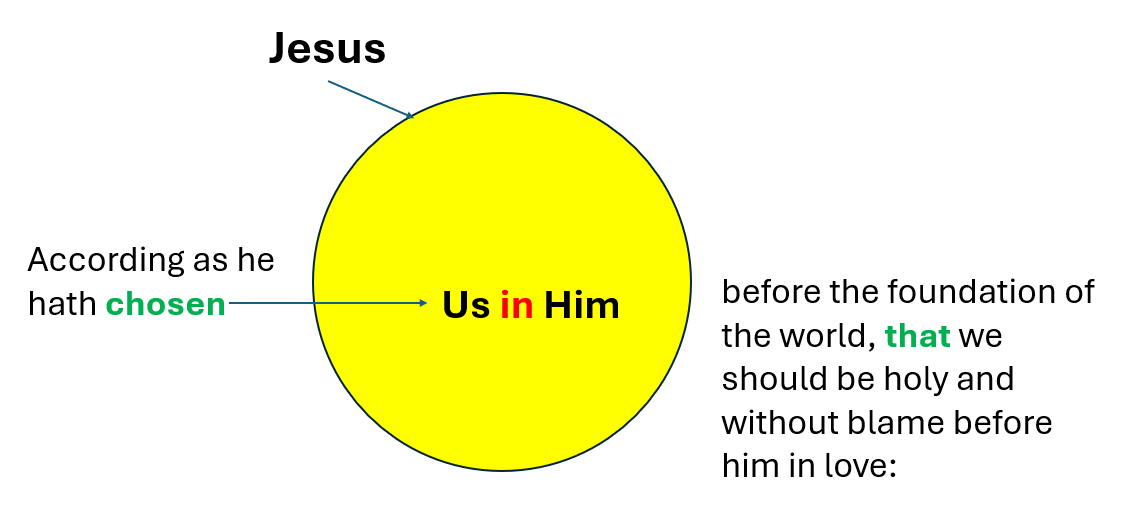
God chose [elected] specific individuals before the foundation of the world to be saved based only on his Sovereign will and was not based on any foreseen response of obedience on their part, such as faith, repentance, etc. [They deny that those not chosen were chosen for damnation, but that’s just semantics, if God in their view is able to save everyone, but only chooses to save some, he has made the choice NOT to save the others]

L = Limited Atonement [also described as Particular Redemption]

Christ’s death only secures the Salvation of those he unconditionally elected.

I = Irresistible Grace

An internal call is given only to those unconditionally elected and cannot be rejected. The Spirit CAUSES the sinner to believe, who then comes willingly [?] to Christ. [If there was such a thing as a “love potion,” and you gave it to someone who despised you and then they came to you and loved you “willingly,” was it actually willingly?]

P = Perseverance of the Saints

All who are chosen by God, redeemed by Christ, and given faith by the Spirit are eternally saved. Those who are elected will absolutely persevere to the end because they are kept by the power of God. If the person seems to believe for a time, but later recants, they were not one of the elect and had evanescent faith. [Faith that fades away]. [By persevere, they mean that they need to continue to do good works, pursue holiness and still believe up to the second they die, that is the only way they will know for sure that they are saved. So there is no assurance of Salvation.]


Chosen Out of Context

One Scripture passage that is occasionally used to support the idea that God chooses who will be saved is John 15:16. This is then quoted out of context “Ye have not chosen me, but I have chosen you.”  However, if taken in context it ONLY applies to the 11 Apostles and has nothing to do with being chosen for salvation.

At the Last Supper after Judas has already left to betray Jesus [John 13:1-4; 24-30], Jesus spoke to the eleven Apostles and said “Ye have not chosen me, but I have chosen you, and ordained you, that ye should go and bring forth fruit, and that your fruit should remain: that whatsoever ye shall ask of the Father in my name, he may give it you.

He is only speaking to the 11 Apostles. When did he choose the Apostles? Luke 6:12-17 tells exactly when they were chosen.

And it came to pass in those days, that he went out into a mountain to pray, and continued all night in prayer to God.  And when it was day, he called unto him his disciples: and of them he chose twelve, whom also he named apostles; Simon, (whom he also named Peter,) and Andrew his brother, James and John, Philip and Bartholomew, Matthew and Thomas, James the son of Alphaeus, and Simon called Zelotes, And Judas the brother of James, and Judas Iscariot, which also was the traitor.”

Jesus gathered all of his disciples together and chose from among them the 12 [of which one was a devil] to be Apostles.  They were chosen for a specific purpose and service. This does not support the view that only those God chooses can be saved.

The disciples were believers before Jesus chose them to be Apostles, they were not chosen TO BE saved, they were chosen to be Apostles, i.e. to serve in the capacity as Apostles